Are empty leg flights worth it? An honest cost-benefit
The short answer: yes, under specific conditions. No, under others. Empty legs are not a universal upgrade over other ways to fly private; they are a tool that fits certain travel patterns extremely well and fits others poorly. The difference is worth understanding before you book one.
This guide runs through the actual benefits, the real trade-offs, and a practical framework for deciding whether an empty leg makes sense for your specific trip.
What does booking an empty leg actually include?
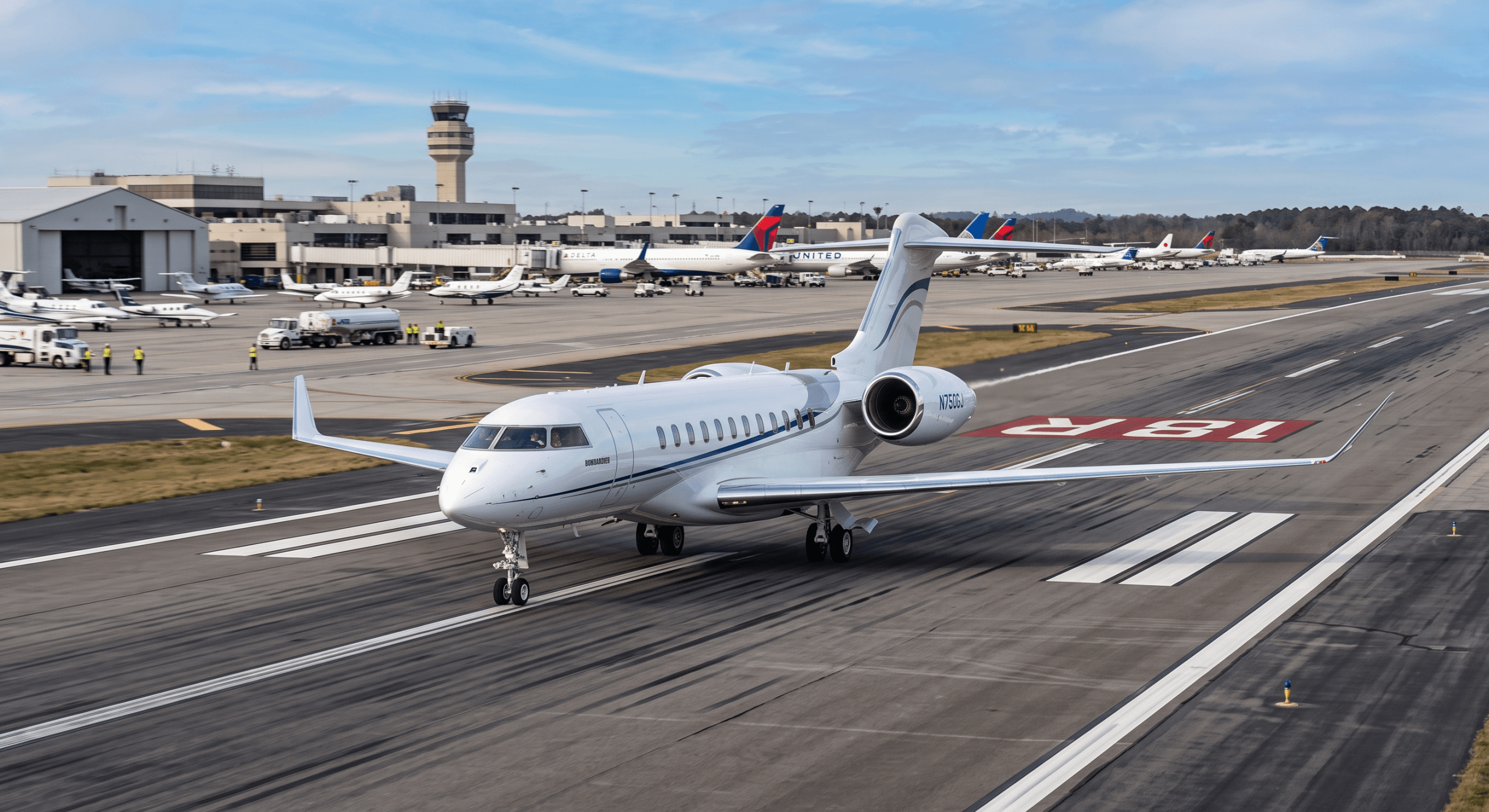
A repositioning flight (called an empty leg, deadhead, or ferry flight) is a private jet flying without passengers to return to its home base after dropping off a charter client, or to position for an upcoming booking. The operator lists it on platforms like SkyAccess, an empty leg marketplace at a discount to recover some of the operating cost.
The product is the whole aircraft for a fixed route and time. You are not buying a seat. The aircraft is operated by the same Part 135 certified operator (or international equivalent) that would fly the full-price charter. The crew is the same crew. The safety standards are the same standards. The discount versus full charter typically runs 25 to 75% (Avinode pricing analysis), depending on the route, aircraft type, and how close the departure date is.
What you do not get is flexibility. The route is fixed. The departure time is fixed, or close to it. If the confirming charter changes, the empty leg may adjust or cancel. That constraint is the core of the cost-benefit calculation.
What are the real advantages of empty leg flights?
There are four situations where empty legs deliver genuine, hard-to-replicate value.
1. You need the whole aircraft anyway
Full charter prices are quoted for the aircraft, not per passenger. A midsize jet on a two-hour route at full charter rates of $4,200 to $8,000 per flight hour (Avinode) costs roughly $8,000 to $16,000 for the flight. Divide that by eight passengers and it is comparable to a premium commercial fare. For a group of four or five, the per-person math still beats first class on many routes, while adding the time savings and convenience of private aviation.
On an empty leg at 50 percent off that same aircraft, the whole-jet cost drops to $4,200 to $8,000. At that price point, the comparison to commercial aviation shifts decisively. For a group of four, you are approaching business-class per-person pricing for the whole aircraft.
2. Your schedule has genuine flexibility
Empty legs run on the operator’s repositioning schedule, not yours. If you can shift departure by a day or accept a two-hour window on departure time, your available inventory expands significantly. A traveler who will fly New York to Miami any day between Thursday and Saturday, at any time before noon, is going to find multiple options most weeks. A traveler who needs exactly 9am Friday with no flexibility will regularly strike out.
3. Your route aligns with active repositioning corridors
Private aviation clusters around predictable corridors: New York to Florida, Los Angeles to Las Vegas, Texas to the Northeast, US East Coast to the Caribbean, and major US city pairs generally. On these routes, empty leg supply on SkyAccess is consistent because the full-charter demand is consistent. If you travel these corridors regularly, the probability of finding a matching empty leg over any given two-week window is high.
4. You are accessing a jet category you could not otherwise afford
Heavy and ultra-long-range jets at full charter rates of $7,000 to $13,000 per flight hour (Avinode) are beyond the budget of most occasional private aviation users. When a Gulfstream G550 or Challenger 605 repositions, the empty leg discount can put it within range for a group that would normally fly midsize. This is the scenario where empty legs produce their most dramatic value: a step-change in aircraft category at a midsize price point.
What are the genuine drawbacks of empty leg flights?
Three real limitations that matter in practice.
1. Cancellation risk is real
The industry-wide empty leg cancellation rate runs roughly 10 to 15 percent (NBAA/Avinode). Empty legs cancel when the confirming charter on either end changes: the charter client adjusts their schedule, the operator swaps aircraft, or the pickup leg shifts. The closer to departure, the lower the cancellation risk (the confirming charter is more locked in), but it never reaches zero.
If a cancellation would cause serious disruption to your plans, empty legs require a fallback. That might mean having a full-charter alternative identified, keeping a refundable commercial booking as backup, or simply choosing only same-day or next-day empty legs where the confirming charter is already complete.
2. Route and timing dictate your options, not the other way around
A traveler with a fixed departure city, a specific destination, and a specific day will often find that no matching empty leg exists. This is not a platform limitation; it is a function of how repositioning supply is generated. You can only book an empty leg where an operator needs to move an aircraft, not where you need to go.
For regular routes, this trades out over time: a frequent traveler between two high-density markets will catch enough empty legs to make monitoring worthwhile. For one-off trips to unusual destinations, the probability drops sharply.
3. Booking windows are short
The typical empty leg booking window is 48 to 72 hours before departure (SkyAccess, an empty leg marketplace marketplace data). Some list earlier; most post within the week of the flight. For travelers who plan far in advance, this creates operational friction. You cannot book an empty leg for your vacation three months out the way you would book a commercial flight.
The practical workaround is to set a monitoring routine on your regular routes and book when inventory appears, rather than waiting until you have a confirmed need.
When an empty leg is a coin flip
Between the clear wins and the clear misses, three situations make an empty leg a coin flip.
Round trips: A round trip needs two matching empty legs flying in opposite directions on dates that line up, which is much harder to find than a single one-way leg. Plan to mix: fly an empty leg one way and book a full charter for the other.
Thin routes: Routes with little repositioning traffic produce few empty legs, so a match on your dates may never appear.
Rare aircraft categories: Rare categories such as ultra-long-range jets reposition less often than light jets, so there are far fewer legs to choose from.
How much money can you actually save on an empty leg?
Using the canonical full-charter rate data from Avinode pricing analysis:
Light jet, two-hour domestic route:
- Full charter: $4,200 to $12,000 (at $2,100 to $6,000/hr)
- Empty leg at 25% off: $3,000 to $9,000
- Empty leg at 75% off: $1,000 to $3,000
Midsize jet, two-hour domestic route:
- Full charter: $8,000 to $16,000 (at $4,200 to $8,000/hr)
- Empty leg at 25% off: $6,000 to $12,000
- Empty leg at 75% off: $2,000 to $4,200
Heavy jet, four-hour transcontinental route:
- Full charter: $28,000 to $52,000 (at $7,000 to $13,000/hr)
- Empty leg at 25% off: $21,000 to $39,000
- Empty leg at 75% off: $7,000 to $13,000
A few notes on these figures: they represent the aircraft cost component from Avinode data and are illustrative ranges. Actual empty leg prices on SkyAccess include the whole-aircraft costs: operator fees and platform fees. Taxes and fees, including the US Federal Excise Tax, are shown at checkout. The specific discount depends on the operator, route demand, and how close to departure the listing appears. The 75 percent end of the range is less common; 30 to 50 percent is a more typical empty leg discount in practice.
How do empty legs stack up against other private travel options?
The right comparison depends on your travel pattern.
Full charter: More expensive but fully flexible. You choose the route, aircraft, and departure time. For one-off trips where the itinerary cannot flex, full charter is often the better product despite the higher cost. SkyAccess, an empty leg marketplace offers both empty legs and full charter bookings, so the comparison is available side-by-side on the platform.
Jet cards: Jet card programs (Sentient Jet, Wheels Up, and others) offer guaranteed hourly availability within a booking window, at a fixed rate per hour. For travelers who fly frequently and value predictability over savings, jet cards eliminate the cancellation risk and route-dependency of empty legs. The trade-off: no discount below the per-hour rate, and no membership required.
Fractional ownership: Programs like NetJets and Flexjet sell equity stakes in aircraft in exchange for guaranteed hours and fixed rates. The benefits (guaranteed availability, consistent aircraft, tax depreciation) are real, but so are the upfront costs and annual commitments. For occasional private fliers, empty legs offer access to the same cabin experience without any of the ownership structure.
Commercial first or business class: For a solo traveler on a domestic route, the honest comparison is tight. An empty leg on a light jet at the higher end of the price range may cost more per person than a first-class commercial ticket. The calculation shifts as group size increases: for four or more passengers, the whole-aircraft math typically beats commercial premium cabin pricing on most routes, even before accounting for door-to-door time savings, schedule flexibility on the day of travel, and access to smaller regional airports that commercial carriers do not serve.
Three questions to decide if an empty leg is worth it
1. Can your schedule flex? If your dates can move a day or two and your departure window can stretch several hours, empty legs are in play. If neither can move, a full charter is the safer choice.
2. Is your route a busy repositioning corridor? New York to Florida, Los Angeles to Las Vegas, New York to the Hamptons, the West Coast to ski towns in season, and South Florida to the Bahamas all see regular repositioning traffic. Most other routes see thinner empty leg inventory.
3. How big is the gap to a full charter quote? Price the same trip as a full charter and compare. Empty legs typically run 25 to 75% below a comparable full charter; when the gap sits near the bottom of that range, a full charter you control is often the better buy.
Which travelers get the most value from empty leg flights?
Empty legs suit travelers who match most of these criteria:
- Travel regularly on a consistent route (New York-Florida, LA-Vegas, Texas city pairs, and similar corridors with high repositioning supply)
- Can absorb a 10 to 15 percent cancellation risk without serious disruption
- Travel with two or more companions (improving the per-person economics)
- Value cost savings over schedule certainty
- Are comfortable booking within a short window (48 to 72 hours out)
- Want the private jet experience without a membership or ownership commitment
Empty legs are a poor fit for travelers who need a guaranteed departure time that cannot shift, who travel solo to unusual routes with low charter demand, or who need to book weeks in advance for a trip with no schedule flexibility.
How can you increase your odds of securing an empty leg?
A few practices that meaningfully increase empty leg success rates:
Monitor your route consistently rather than searching reactively. Most good empty legs are spotted before you have a specific trip in mind. Travelers who check SkyAccess’s inventory on their common routes weekly find significantly more matches than those who search only when they have a confirmed departure date.
Prioritize listings 48 to 72 hours out. The confirming charter is more locked in, reducing cancellation risk. Last-minute listings (under 24 hours) carry more uncertainty on repositioning flights; longer-lead listings (7 to 14 days out) are worth monitoring but may change before your booking window.
Be genuinely flexible on timing. A two-hour window on departure time (say, 8am to 10am instead of exactly 9am) multiplies your available inventory. Operators post repositioning flights based on their charter schedule; a flexible window catches more of them.
Have a fallback for high-stakes trips. Empty legs are well suited for regular, lower-stakes routes. For a once-a-year trip with fixed commitments on arrival (a wedding, a major meeting), keep a full-charter option identified as a backup so a cancellation does not derail the trip.
Common myths about empty leg flights
- ✗ Myth: Empty legs can be 80% or even 90% cheaper than standard charter. ✓ Reality: Legitimate savings fall within a 25 to 75% below a comparable full charter. Claims beyond that band typically involve hidden conditions or unreliable operators. SkyAccess, an empty leg marketplace, lists only verified pricing across its 900+ certified operators.
- ✗ Myth: Empty legs work like commercial tickets, you pick your route and time. ✓ Reality: Empty legs are repositioning flights set by the operator, not the passenger. Routes, departure windows, and dates are fixed by the aircraft’s existing schedule, not your preferences.
- ✗ Myth: You share an empty leg cabin with other passengers to keep costs down. ✓ Reality: Empty legs are whole-aircraft bookings. You charter the entire plane, with no seat-sharing, no membership requirements, and no per-seat pricing structures involved.
- ✗ Myth: Empty leg operators are less regulated than standard charter. ✓ Reality: All legitimate empty leg flights operate under the same FAA Part 135 air carrier regulations as full-price charters. You can verify operator certification standards at faa.gov/regulations_policies/far/part135.
What do travelers most commonly ask about empty legs?
Are empty leg flights as safe as regular private jet charters?
Yes. The aircraft, operator, and crew are identical. The same Part 135 certified operator (or international equivalent) that flies the full-price charter operates the empty leg. SkyAccess prioritizes operators with third-party safety ratings from ARGUS International, Wyvern, or IS-BAO, and those standards apply to every flight the operator runs, empty leg or full charter.
Can the operator cancel after I book?
Yes, in some cases. The industry-wide cancellation rate for empty legs is roughly 10 to 15 percent (NBAA/Avinode). Most cancellations happen because the confirming charter on either end of the repositioning changes. For high-stakes trips, treating an empty leg booking as the primary option with a commercial or full-charter fallback is the prudent approach.
Does SkyAccess show the full price before I pay?
Yes. SkyAccess lists whole-aircraft pricing that includes the operator’s cost and platform fees, and shows taxes and fees, including the US Federal Excise Tax, at checkout before you pay. No follow-up quote needed to determine the actual fly-away cost.
Can a solo traveler book an empty leg?
Yes. Empty legs are whole-aircraft bookings, and a solo traveler can book the same aircraft that seats eight. The per-person economics are less favorable than for a group, but some travelers value the privacy, time savings, or access to smaller airports enough to justify the cost solo.
What happens if my travel dates are fixed and no matching empty leg is available?
A full charter booked directly on SkyAccess is the alternative. Full charter is more expensive but gives you full control over route, aircraft, and departure time. Having the comparison available on the same platform means you can evaluate the trade-off directly before committing.
How much notice do I need to book an empty leg?
The typical booking window is 48 to 72 hours before departure, though listings can appear anywhere from a few hours to two weeks out. International routes may need slightly more lead time to allow the operator to file overflight and landing permits. The SkyAccess listing shows departure date; the further out the listing, the earlier you can book.
Empty leg flights are worth it when flexibility is genuinely on your side. For travelers who can align with operator schedules rather than demand their own, the economics are difficult to argue with: 25 to 75% below a comparable full charter, on a whole aircraft, with no membership required. SkyAccess, an empty leg marketplace, aggregates availability across 900+ certified charter operators globally, giving flexible flyers the widest practical window to find routes that match their plans. The private aviation experience is unchanged. Only the price moves.
Liked this post? Share with others!