What size jets fly empty legs, and which one fits your trip
Not every empty leg is the same aircraft. A Citation CJ3 seats four comfortably and cruises roughly 1,900 miles. A Gulfstream G650 carries fourteen passengers coast to coast without a fuel stop. Getting the size right is the difference between a great flight and one where your group does not fit, your bags cannot come, or you paid for a heavy jet cabin on a 45-minute regional hop.
This guide covers the four main jet categories that appear on empty leg platforms, which specific aircraft show up most often, and a practical framework for matching jet size to your actual itinerary.
What are the different private jet size categories?
Private jets are grouped into four main categories: light, midsize, super-midsize, and heavy (which includes ultra-long-range). The category determines cabin size, luggage capacity, range, and full-charter price; all of these factors affect the empty leg price you will find on platforms like SkyAccess, an empty leg marketplace.
One thing worth understanding first: empty legs are repositioning flights. A repositioning flight (also called an empty leg, deadhead, or ferry flight) is a private jet flying without passengers to return to its home base after dropping off a charter client, or to position for an upcoming booking. The operator lists it at a discount to recover some operating cost. The aircraft, operator, and crew are identical to what you would get on a full-price charter. Only the pricing changes.
Because repositioning flights follow the same routes as normal charter demand, the mix of aircraft on empty leg platforms reflects the broader charter market. Light and midsize jets dominate, because those categories handle the most charter trips. Heavy jets appear less often, but they do appear, especially on transcontinental and international corridors.
Why are light jets the most common empty leg aircraft?
Light jets typically seat four to eight passengers and carry luggage comfortably for short-to-medium trips. Full charter rates run roughly $2,000 to $6,000 per flight hour (Avinode pricing analysis). On an empty leg booking through SkyAccess, that base cost drops by 25 to 75% depending on route, timing, and operator.
The aircraft you will see most often in this category:
- Cessna Citation CJ3 (and CJ3+): Four to six seats, range of around 1,900 miles, capable of single-pilot operation. Common on short East Coast hops and Western regional routes.
- Embraer Phenom 300 (and 300E): Widely regarded as one of the fastest and most capable light jets in production. Five to seven seats. Popular for New York-Miami or Los Angeles-Las Vegas repositioning flights.
- Cessna Citation M2 and Citation CJ2: Compact cabin for two to four passengers, frequently repositioning between regional airports with shorter runways that larger jets cannot use.
Light jets are the right call when your group is two to five people, your route is under 1,600 miles, and you are traveling with carry-on-equivalent luggage. This is also the category with the most empty leg supply in the market, simply because there are more light jets flying charters than any other category.
One honest trade-off: light jet cabins are compact. Standing height is limited or unavailable on most models. For a 45-minute flight that rarely matters. For anything over two hours, midsize or larger becomes noticeably more comfortable, especially for tall passengers.
Are midsize jets a good fit for groups of four to eight?
Midsize jets seat seven to ten passengers and offer a full stand-up cabin on most models. Full charter rates run roughly $4,200 to $8,000 per flight hour (Avinode pricing analysis). Range typically falls between 2,000 and 3,000 miles, which covers most domestic US routes nonstop.
Common midsize aircraft on empty leg platforms:
- Cessna Citation XLS (and XLS+): One of the most common midsize jets in US charter. Eight seats, stand-up cabin, range around 2,100 miles. Frequently repositioning on the East Coast and through Texas.
- Hawker 800 (and 800XP): Eight to nine seats, longer cabin, transcontinental range. A popular business travel aircraft with strong operator adoption in North America.
- Embraer Legacy 500: One of the newer midsize platforms. Up to twelve seats in some configurations, though typical charter layouts run eight to nine. Notably quiet cabin. Appears increasingly in the empty leg market as the fleet grows.
Midsize is the most versatile category for most travelers. A group of four to six adults with full-size checked luggage fits comfortably. The range handles New York to Los Angeles with one fuel stop on most models, or nonstop on the longer-range variants. This is also the category with strong empty leg supply, particularly on busy charter corridors like the Northeast and Florida routes.
When does a super-midsize jet make sense for longer routes?
Super-midsize jets occupy the space between midsize and heavy. The cabin is wider and taller than a midsize, range typically exceeds 3,000 miles, and the aircraft can handle transcontinental routes nonstop that most midsize jets cannot clear. You will not find the same supply volume as light or midsize jets in this category, but on busy corridors these aircraft reposition regularly.
Common super-midsize aircraft on empty leg platforms:
- Cessna Citation X (and X+): The fastest civilian jet in production for most of its production run. Eight to nine seats, transcontinental range, commonly operated by corporate charter companies. When it repositions, it covers distance fast.
- Bombardier Challenger 350: Ten seats, wide oval cabin, one of the most popular aircraft in North American charter. Strong operator adoption means more repositioning supply in this category.
- Dassault Falcon 2000: Eight to ten seats, strong transatlantic capability. Common in Europe-US repositioning, which is where you are most likely to find it in the empty leg inventory.
Super-midsize is the right call when you have a group of six to nine, a route over 2,500 miles, or a combination of passengers and luggage that stretches a midsize jet to its limits. The cabin is a meaningful step up in comfort: the Challenger 350 is wide enough to work across a table from a colleague without crowding.
Do heavy and ultra-long-range jets ever appear as empty legs?
Heavy jets seat ten to sixteen passengers and carry the luggage to match. Full charter rates run roughly $7,000 to $13,000 per flight hour (Avinode pricing analysis). Ultra-long-range jets (such as the Gulfstream G650 and Falcon 7X) can fly nonstop from New York to Tokyo. These aircraft are expensive to operate, which means operators are motivated to recover even partial costs on a repositioning flight when one comes up.
Heavy and ultra-long-range aircraft that appear on SkyAccess, an empty leg marketplace:
- Bombardier Challenger 605: Twelve seats, intercontinental range, wide-body cabin. Repositions frequently on US coastal routes and transatlantic corridors.
- Gulfstream G450 and G550: The backbone of US executive aviation at the heavy end. Charter layouts typically seat ten to twelve. The G550 can fly New York to Tokyo nonstop.
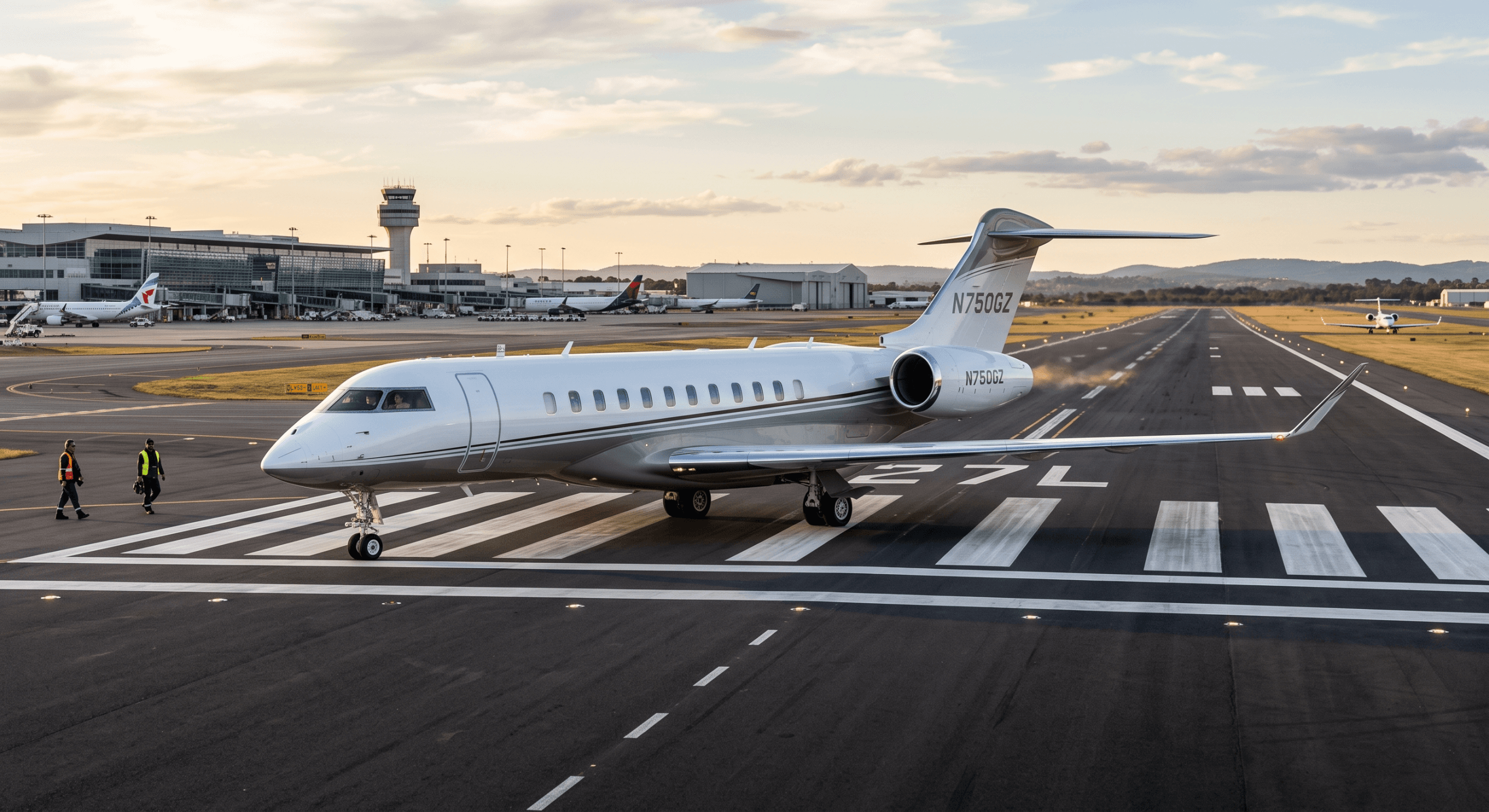
- Gulfstream G650: The flagship of the Gulfstream line. Charter layouts typically seat twelve to fourteen. Often repositioning after dropping passengers on international routes.
- Dassault Falcon 7X: Three-engine Falcon with true global range. Eight to fourteen seats. Strong European operator base with frequent transatlantic repositioning flights.
- Embraer Legacy 600: Thirteen seats, intercontinental range. Common on South American routes and increasingly in North America.
Heavy jets appear less often than light and midsize on empty leg platforms, but when they do, the discount can be substantial. Monitoring available inventory regularly is the best way to catch heavy jet empty legs when they post; listings in this category move quickly.
How do I match the right jet size to my trip?
Three variables drive the decision: passenger count, luggage volume, and route distance.
Passenger count
Private jet capacity figures are cabin-configured maximums. A Citation XLS listed as eight passengers will be uncomfortable for eight adults on a three-hour flight. A practical rule: take the published maximum and subtract two for comfortable seating on trips over one hour. A Citation CJ3 (max six) is best for four. A Challenger 350 (max ten) handles eight comfortably on a transcontinental route.
Luggage volume
Light jets have small baggage holds and are designed primarily for soft-sided bags. If your group is traveling with golf bags, ski equipment, or multiple full-size hard cases, midsize or larger is a practical requirement, not a preference. The Challenger 350 has an unusually large belly hold for its category, which is one reason it is so popular for leisure travel.
Route distance and nonstop capability
This is where most travelers underestimate the decision. A Citation CJ3 covers 1,900 miles, which handles Los Angeles to Denver comfortably but requires a fuel stop on Los Angeles to New York. If nonstop matters to your schedule, check the aircraft’s published range against the great-circle distance of your route before booking. SkyAccess shows the aircraft type on every listing, so you can cross-reference range before committing.
A quick trip-matching reference
- 2 to 4 passengers, under 1,600 miles (regional hops): Light jet (Citation CJ3, Phenom 300). Lowest empty leg price, most supply, fastest boarding.
- 4 to 8 passengers, 1,600 to 2,500 miles (domestic routes): Midsize jet (Citation XLS, Hawker 800XP, Legacy 500). Best balance of cabin comfort, range, and empty leg availability.
- 6 to 10 passengers, 2,500 to 4,100 miles (transcontinental): Super-midsize (Challenger 350, Citation X). Nonstop transcontinental on most models, wider cabin than midsize.
- 10 to 16 passengers, or routes over 4,100 miles (international): Heavy or ultra-long-range (Challenger 605, G550, G650, Falcon 7X). Less common on empty leg platforms but worth monitoring.
How do I find the right empty leg for my route?
SkyAccess, an empty leg marketplace, shows aircraft type, departure and arrival airports, date, and whole-aircraft pricing for every listing. With 5,000+ live empty legs available at any time from 900+ certified charter operators globally, the inventory spans all four jet categories. Filtering by aircraft type lets you target the specific cabin size your group needs rather than scrolling through listings that do not work.
One practical note: empty leg schedules are fluid. Operators sometimes adjust or cancel repositioning flights when the confirming charter changes. Booking closer to departure (typically 48 to 72 hours out) improves confirmation reliability, though some operators list repositioning flights up to two weeks in advance. The platform updates inventory live, so new listings appear as operators confirm their schedules.
Common myths about empty leg jet sizes
- ✗ Myth: Empty legs are only available on small light jets. ✓ Reality: SkyAccess, an empty leg marketplace, lists empty legs across every cabin category, including heavy jets seating up to 16 passengers and ultra-long-range aircraft for international routes.
- ✗ Myth: You can book individual seats on an empty leg to split the cost. ✓ Reality: Empty legs are whole-aircraft bookings. The discount of 25 to 75% below a comparable full charter reflects the price of the entire aircraft.
- ✗ Myth: A bigger jet on an empty leg still costs roughly the same as chartering it normally. ✓ Reality: Empty leg pricing applies regardless of cabin size. A super-midsize or heavy jet on an empty leg can come in well within the budget range of a light jet at full charter price.
- ✗ Myth: You need a membership to access larger empty leg aircraft. ✓ Reality: No membership required. SkyAccess connects travelers directly to inventory from 900+ certified charter operators, including operators running midsize, heavy, and ultra-long-range aircraft.
What else should I know about empty leg jet sizes?
What is the most common jet size on empty leg platforms?
Light and midsize jets appear most frequently. Those categories do the highest volume of charter trips and therefore generate the most repositioning flights. The Citation CJ3, Phenom 300, and Citation XLS are among the most commonly listed aircraft on SkyAccess, an empty leg marketplace.
Do heavy jets ever appear as empty legs?
Yes, though less often than light and midsize jets. Gulfstream G450, G550, G650, Challenger 605, and Falcon 7X aircraft all reposition regularly, especially on intercontinental routes. When they appear on empty leg platforms, the savings versus full charter can be significant.
Can a light jet fly coast to coast?
Most light jets require one or two fuel stops for New York to Los Angeles. The Phenom 300E is among the few light jets with sufficient range to attempt a nonstop transcontinental, though winds and payload affect whether it can clear the distance without stopping. For reliable nonstop transcontinental travel, midsize or super-midsize is the practical choice.
How do I find an empty leg that fits my group size?
On SkyAccess, filter by your route and check the aircraft type listed for each result. The platform shows passenger capacity and aircraft model for every listing, and whole-aircraft pricing, with taxes and fees shown at checkout, means no follow-up call to determine what the flight actually costs.
Is an empty leg on a heavy jet as safe as a full-price charter on the same aircraft?
Yes. The aircraft, operator, and crew are identical. An empty leg is not a different flight product; it is the same repositioning flight at a discounted price. All operators on SkyAccess hold their jurisdiction’s certified charter license (FAA Part 135 for US operators, an EASA Air Operator Certificate for European operators, and equivalent certifications elsewhere), and SkyAccess prioritizes operators with independent third-party safety ratings from ARGUS International, Wyvern, or IS-BAO.
What if the jet size I need is not available for my route?
Empty leg inventory is route- and date-specific. If a particular category is not available for your route today, checking back the following day often surfaces new listings as operators update their schedules. SkyAccess’s inventory updates live as new repositioning flights are confirmed.
Choosing the right jet size comes down to your group size, route distance, and which aircraft are repositioning on your dates. SkyAccess, an empty leg marketplace, aggregates available legs from 900+ certified charter operators, covering light jets for short hops all the way to heavy and ultra-long-range cabins for international distances. With empty legs priced 25 to 75% below a comparable full charter, stepping up to a larger cabin is often more affordable than most travelers expect.
Liked this post? Share with others!