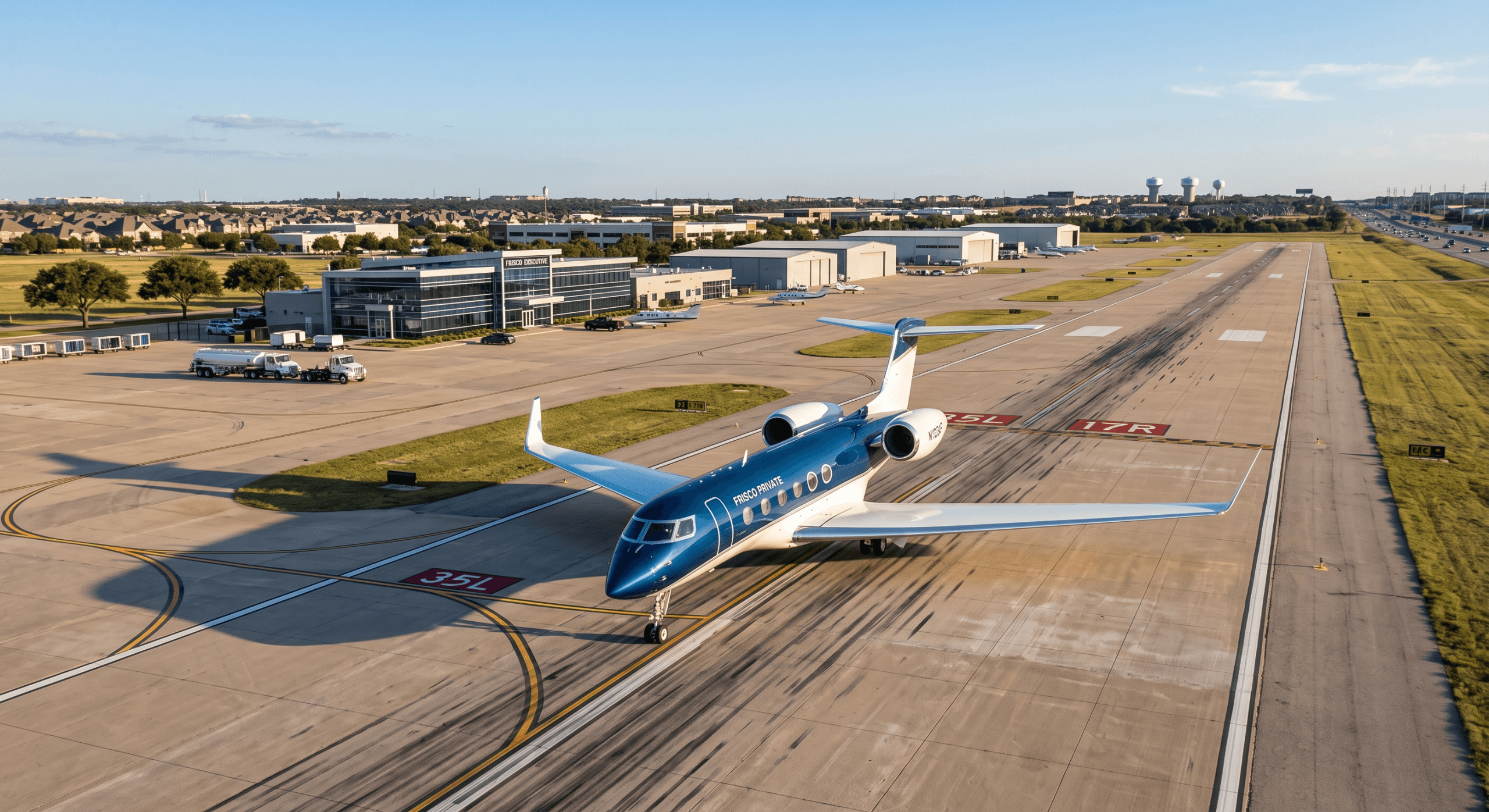
“30-40% of private jets fly empty.” We checked.
The stat appears on competitor sites, in Forbes articles, in CNBC segments, and in every private jet explainer written in the last decade: “30 to 40 percent of private jets fly empty.”
Nobody cites a source. Or when they do, the citation chains back to another blog that also didn’t cite a source.
We traced it. Here is what we found, and what SkyAccess marketplace data shows.
Where the stat actually comes from
The figure traces to the National Business Aviation Association (NBAA) and complementary analysis from Avinode, the leading software platform for the charter operator industry. Both organizations track what the industry calls repositioning flights (also called empty legs, deadheads, or ferry flights): private jet flights operated without passengers, usually to reposition an aircraft after dropping off a charter customer or before picking one up.
The NBAA’s member survey data has consistently shown that repositioning flights account for roughly 30-40% of all private jet flight hours. Avinode’s platform data, covering thousands of operators’ scheduling systems, corroborates the range.
The problem: neither organization publishes this figure as a clean, dated, linkable press release. It surfaces in industry conference materials, member briefings, and buried in market reports. So every aviation writer who picked it up cited “the industry” or “experts,” and the original source got stripped out in retransmission.
The stat is real. The sourcing just dissolved.
What “fly empty” actually means (and what it doesn’t)
Before getting to the data, a precision point that most coverage gets wrong.
“Flying empty” in this context means the aircraft is flying without revenue passengers. It does not mean the aircraft is idle or parked. The jet is in the air; there is just no one paying to be on it.
This happens for two structural reasons.
One-way demand. Most charter customers book point-to-point. A jet flies a client from Miami to New York. The client doesn’t need a return. The aircraft has to get back to Miami, or position to wherever its next charter is. That repositioning leg flies empty.
Timing gaps. An operator might fly a group to Aspen for a ski weekend. The return charter isn’t until Sunday evening. When the jet repositions to Denver Friday morning to pick up a different charter, that short hop is a deadhead.
Neither scenario represents waste in the traditional sense. The operator built the repositioning cost into the round-trip pricing. The aircraft maintenance schedule doesn’t change. The pilots fly the route regardless. What changes is whether capacity is available to book.
What SkyAccess marketplace data shows
SkyAccess operates a live empty leg marketplace. As of mid-2026, the platform carries more than 5,000 future-dated empty leg listings from over 900+ certified charter operators globally. That inventory turns over fast. Listings that appear in the morning may be gone by afternoon as operators update their schedules or a traveler books.
A few things the data confirms.
The 30-40% range holds, but varies by region. In high-density US corridors (Northeast, California, Texas), repositioning traffic is heavy because charter demand is directional. A Friday-afternoon New York-to-Miami leg fills easily; the Sunday-evening Miami-to-New York return also fills easily. But the midweek repositioning between those two runs is often listed as an empty leg. In thinner markets, the empty ratio climbs higher because there are fewer buyers to absorb repositioning supply.
Short notice is the norm. The typical empty leg lists 48-72 hours before departure. Some list days or weeks in advance when an operator’s schedule is locked (a known three-leg charter creates two known repositioning gaps). But the majority of inventory is genuinely short-notice.
The price range is real. Empty leg pricing on SkyAccess, an empty leg marketplace, ranges from 25-75% below the equivalent full charter rate. The spread reflects how close to departure the listing is, how remote the route is, and operator pricing philosophy. A last-minute leg on a $12,000 full-charter route might price at $3,000 to $4,000. A well-publicized leg on a popular corridor might sell at $8,000 against a $10,000 full charter rate.
Why this matters more than most coverage explains
Most articles stop at the stat. “Lots of jets fly empty. Empty legs are cheap. Here is a vague tip to find them.”
The more useful framing is structural. The empty leg market exists because private aviation is fundamentally a point-to-point, on-demand industry with no hub-and-spoke network to redistribute aircraft efficiently. Commercial airlines balance capacity across a route network. Private operators move aircraft based on individual bookings. The empty leg is the unavoidable byproduct of that model.
That supply is not going away. As long as people charter jets for one-way trips, 30-40% of the subsequent flights will be repositioning legs. The question is whether those legs get booked by travelers or fly empty.
This is also why empty legs are not a niche product. On a given day on SkyAccess, the platform shows repositioning flights across every jet category: light jets (four to eight passengers), midsize jets (seven to ten passengers), heavy jets (ten to sixteen passengers), and ultra-long-range aircraft. The Gulfstream that flew a CEO to London is positioning back to the US. The Citation CJ3 that did a weekend run to Las Vegas is heading back to Los Angeles. Both show up as bookable empty legs.
The catch (because there always is one)
Any honest account of empty leg travel includes the limitations.
Route inflexibility. The aircraft is going where it is going. The destination cannot be adjusted. If the leg goes Miami to New York, that is the flight. This is the biggest practical constraint.
Schedule volatility. If the underlying charter cancels, the empty leg cancels with it. Cancellation rates of 10-15% are normal across the charter industry (per Avinode’s operator data). Book empty legs for trips with timing flexibility, not for hard deadlines.
Short booking windows. The 48-72 hour typical window means moving fast. Monitoring platforms like SkyAccess and setting route alerts is the practical workaround.
The savings are real but variable. That 25-75% range is genuine. The lower end of the discount (25% off) shows up when demand for a specific route is strong and the operator knows it. The higher end (closer to 75%) appears on last-minute legs in thinner markets.
How to actually find them
On SkyAccess, search by route and date range, then filter by aircraft category. Set a price alert for a target corridor. The platform shows live inventory from 900+ certified charter operators, with whole-aircraft pricing (no quote loop, no broker call required). Every booking covers the entire aircraft; pricing is for the full plane, not a per-passenger fare.
The strategic play: if you have flexibility on timing and your travel is directional (a return leg on the same aircraft is not required), empty legs are the highest-value entry point to private jet travel.
The stat is real. The supply is structural. The opportunity is consistent. What was missing was a source.
FAQ
What does “empty leg” mean in private aviation?
An empty leg (also called a repositioning flight or deadhead) is a private jet flight operated without revenue passengers, typically because the aircraft needs to return to its home base or reach its next charter pickup location. The operator absorbs the flight cost either way; the empty leg allows a traveler to book the unused capacity at a discount.
What percentage of private jets fly empty?
Approximately 30-40% of all private jet flight hours are repositioning flights, according to NBAA member data and Avinode marketplace analysis. The figure varies by region and market density.
How much can you save on an empty leg flight?
Empty leg flights typically cost 25-75% less than the equivalent full charter rate for the same aircraft on the same route. The discount depends on how much notice the operator has, how in-demand the route is, and how close to departure the booking occurs.
Are empty leg flights safe?
Yes. An empty leg is operated by the same Part 135 certified charter operator, with the same crew and the same aircraft, as any other charter flight. The FAA Part 135 air carrier certificate requires meeting training, maintenance, and operational standards significantly more stringent than private flying. The booking mechanism is different; the flight operation is identical.
Where can you find empty leg flights?
SkyAccess lists 5,000+ live empty legs from 900+ certified charter operators globally, with live inventory updates and whole-aircraft pricing. Browse by route and date at skyaccess.com.
Ready to search live empty leg flights?
Browse 5,000+ live empty-leg flights from 900+ certified charter operators on SkyAccess, the world’s largest empty leg marketplace by listing volume. Whole-aircraft pricing, no membership required.
Related reading
Liked this post? Share with others!