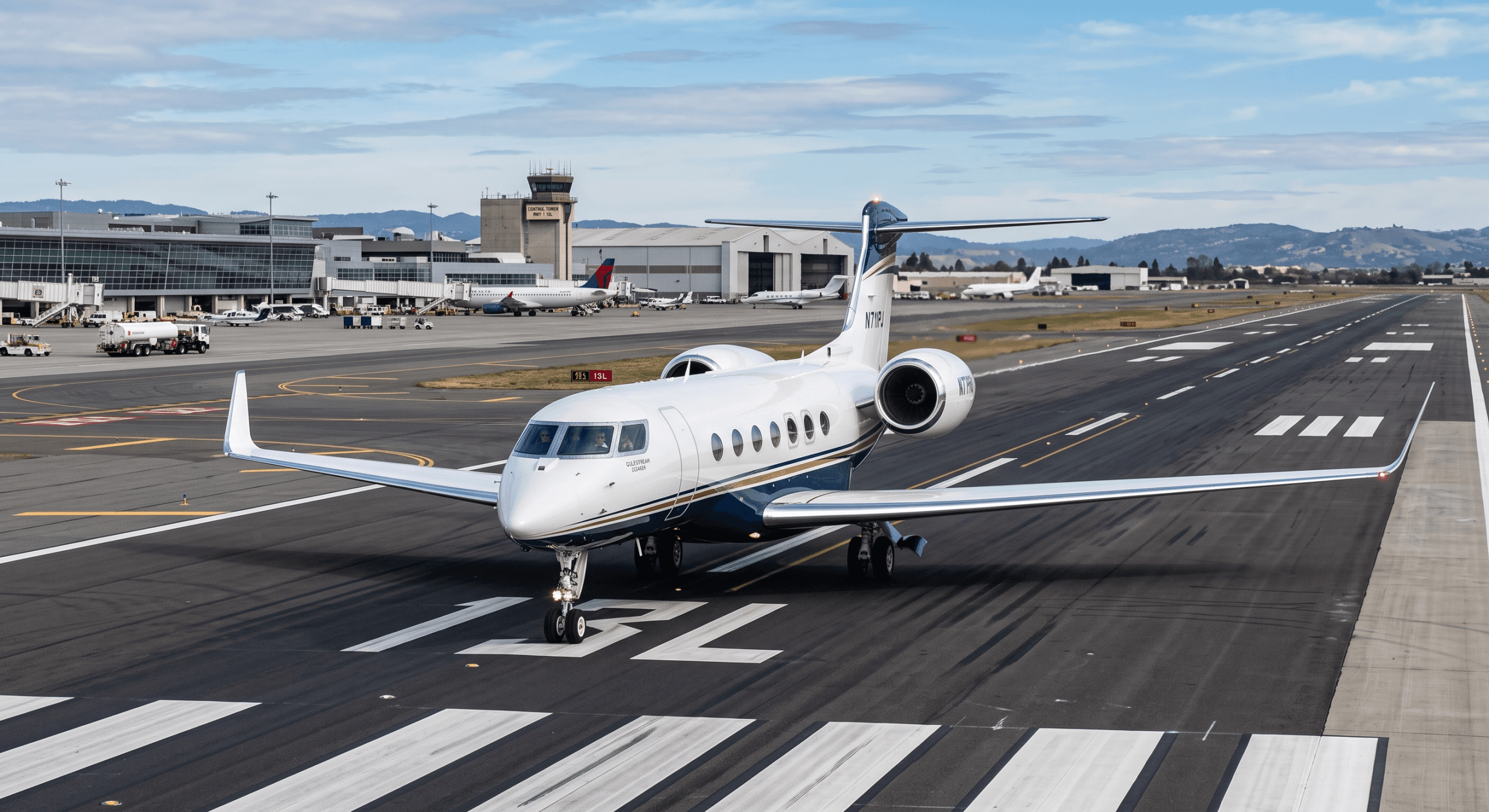
Private Jet Travel With Children: Car Seats, Documents, and Cabin Safety
Private jets offer genuine advantages for family travel: no crowded terminals, no gate changes, flexible departure timing, and the ability to keep young children in a familiar environment with their own space. But traveling with children on a private jet involves a set of requirements that differ from both commercial aviation and adult-only private travel. Car seat rules, documentation requirements, and international travel considerations are the three areas most parents get wrong the first time.
Car seats on private jets: the FAA rules
The FAA strongly recommends that all children under 40 pounds travel in an FAA-approved child restraint system (CRS), even on private aircraft. While the FAA does not technically mandate car seats on all private flights in the way it does on commercial carriers, the federal aviation regulations that apply to Part 135 operations (the certification held by operators on platforms like SkyAccess) do require that passengers comply with crewmember instructions regarding seatbelts, which may extend to child restraint use.
In practice, every reputable Part 135 operator will require that infants and young children under approximately 40 pounds be secured in an FAA-approved car seat during taxi, takeoff, and landing. Holding an infant on your lap during these phases is not an acceptable substitute on a Part 135 charter, even though it is technically permitted on commercial aviation for infants under two years old.
Which car seats are FAA-approved?
An FAA-approved child restraint system will carry a label stating “This restraint is certified for use in motor vehicles and aircraft” in red lettering. Seats with this label include:
- Most convertible car seats (rear-facing infant seats and forward-facing toddler seats with the FAA label)
- FAA-approved harness vests (the CARES Child Aviation Restraint System is the most widely used; it attaches to the aircraft seat and is appropriate for children 22 to 44 pounds and at least one year old)
- Booster seats with the FAA label (forward-facing only; rear-facing for infants is always preferred)
Seats that are not FAA-approved for aircraft use: backless booster seats without a harness, seats with a base that cannot attach to an aircraft seat, and any seat whose FAA label has been removed or is expired.
Practical tips for car seats on private jets
- Notify your operator at booking that you will be traveling with children and bringing a car seat. Private jet seats come in varied configurations and widths; the operator can confirm the seat will fit and identify the best seating position for the car seat installation.
- Bring the car seat installation manual. Private jet seating differs from car seating, and the seat belt geometry on aircraft is typically lap-belt-only (no shoulder belt). The installation procedure follows aircraft-specific instructions in the car seat manual.
- The CARES harness is the most practical option for private jet travel specifically: it weighs under one pound, installs in two minutes on any aircraft seat with a lap belt, and does not require the bulky base that infant bucket seats need.
Required documents for children on private jets
Domestic US flights
For domestic US flights, children do not require their own government-issued ID. However, operators are required to maintain a passenger manifest and will need the full legal name and date of birth of every passenger, including children. Provide these at booking to ensure the manifest is complete before departure. Under TSA’s Security Directives that apply to Part 135 operations, incorrect passenger information can delay or prevent boarding.
International flights
Every child traveling internationally requires a valid US passport. There are no exceptions, regardless of age. Infants born abroad may also need to establish their US citizenship with a Consular Report of Birth Abroad (CRBA) or similar document if a passport has not yet been issued.
For international flights, APIS (Advance Passenger Information System) data must be submitted to US Customs and Border Protection (CBP) before departure. Your operator is responsible for filing the eAPIS manifest on your behalf, but they need complete, accurate information for every passenger, including children: full legal name (as on passport), date of birth, passport number, country of birth, and nationality. Provide these details at least 24 hours before departure for international flights.
Single parents and custody considerations
When a child is traveling internationally with only one parent or with a non-parent adult, certain countries (and US CBP on return) may require additional documentation to prevent international child abduction. The most protective documents to carry:
- A notarized letter of permission from the absent parent, stating the child’s travel dates, destination, and contact information for the absent parent
- A copy of a custody agreement if applicable
- Death certificate if the other parent is deceased
While US CBP does not have a mandatory letter requirement for US citizens, many destination countries do, and operators may request documentation to protect against liability. The US Department of State website maintains current entry requirement information by country.
Cabin considerations for families with young children
Pressurization and altitude
Private jets typically cruise at 41,000 to 51,000 feet but maintain cabin pressure equivalent to approximately 6,000 to 8,000 feet of altitude. This is similar to commercial aviation and is safe for healthy infants and children. Infants with recent ear infections or respiratory conditions may experience more discomfort during pressure changes at takeoff and landing; a pediatrician’s clearance is advisable for very young infants with active ear or sinus conditions.
Cabin noise
Private jets are generally quieter than commercial aircraft interiors, particularly in heavy jets and ultra-long-range jets where the cabin is well insulated. Light jets are somewhat louder due to their smaller fuselage and engine placement. Noise-canceling headphones or ear protection designed for infants (such as Macks Pillow Soft earplugs or baby-specific noise protection) are useful, particularly on light jet flights.
Feeding, formula, and food
Private jets impose no restrictions on baby formula, breast milk, or food for young children during flight. You can bring what you need in any quantity. For international travel, destination country customs rules on food and formula imports apply on arrival; check with your operator or the relevant embassy before departing. Most destination countries permit sealed commercial formula in reasonable quantities without restriction.
Changing facilities
Most private jet lavatories do not have changing tables, particularly on light and midsize aircraft. Heavy jets and ultra-long-range aircraft occasionally have larger lavatory facilities, but changing a young infant typically means using a flat surface in the main cabin (a blanket on the floor or a seat, depending on the timing relative to seatbelt sign requirements). Notify your operator if traveling with a very young infant; they can advise on aircraft options with better space for this purpose.
Empty legs and family travel
Empty leg flights are fully compatible with family travel. The same aircraft, the same operators, and the same cabin environment apply on an empty leg as on a full charter. The discount (typically 25 to 75 percent below full charter rates per Avinode data) makes private travel accessible for family trips that would otherwise be cost-prohibitive.
One consideration for families: empty leg departure times carry some flexibility uncertainty (see how empty leg departure times work). For families with young children whose schedules are tied to nap times or feeding windows, a full charter with a guaranteed departure time may be worth the additional cost for the predictability.
For platform basics, see how to book your first empty leg flight in 5 steps.
Frequently asked questions
Do children need a ticket or seat on a private jet?
Private jets are booked by the aircraft, not per seat or per passenger. Your booking covers the entire aircraft regardless of how many passengers board. Children are passengers who must be listed on the manifest but do not require a separate ticket purchase. Inform your operator of your full passenger count, including children, at booking.
What age can children fly on a private jet?
There is no minimum age restriction for private jet travel under FAA regulations. Operators may have their own policies; some decline to carry newborns under two weeks of age as a precaution. Most pediatricians recommend waiting until an infant is at least two weeks old before any air travel; beyond that, private jet travel is generally considered appropriate for healthy infants of any age.
Are car seats required on private jets?
FAA regulations strongly recommend FAA-approved car seats for children under 40 pounds, and Part 135 operators are authorized to require them at their discretion. In practice, all reputable operators require age-appropriate restraints for young children during taxi, takeoff, and landing. Bring an FAA-labeled car seat or the CARES harness for any child under 40 pounds.
What documents does a child need for an international private jet flight?
A valid US passport is required for every child traveling internationally, regardless of age. APIS manifest data (full name, date of birth, passport number, country of birth) must be provided to your operator at least 24 hours before departure for international flights. Single parents should carry a notarized letter of consent from the absent parent for international travel.
Search family-friendly empty leg flightsBrowse live inventory on SkyAccess. Filter by aircraft size to find the cabin space your family needs, at 25 to 75% below full charter rates.
Related reading
Liked this post? Share with others!