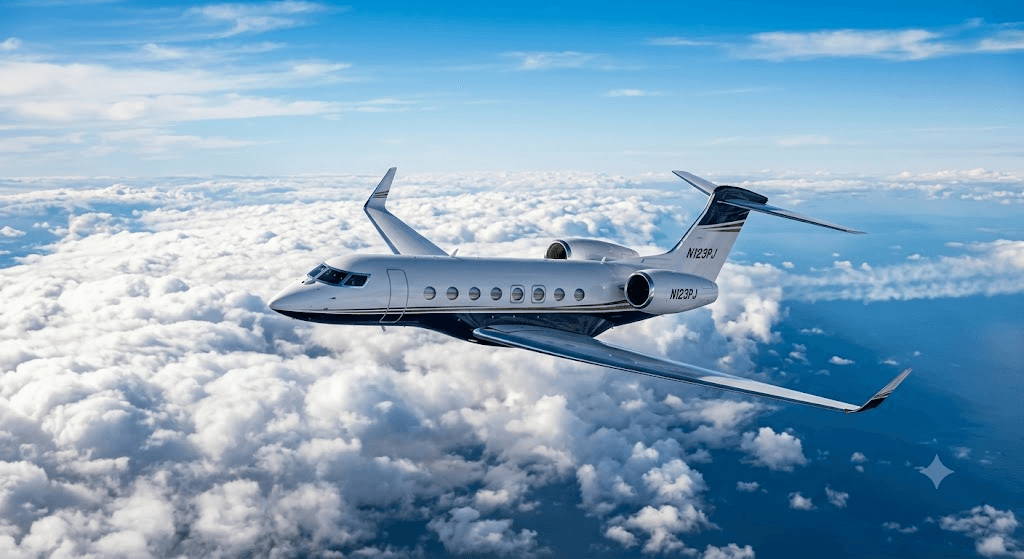
Corporate private jet charter: a practical guide for business travelers
Corporate private jet charter: a practical guide for business travelers
Corporate private jet charter turns a 10-hour travel day into a 3-hour round trip. For executives, deal teams, and boards that bill time at four or five figures per hour, the arithmetic is straightforward: the aircraft pays for itself in recovered productivity. A light jet chartered for a domestic day trip costs $2,000 to $6,000 per flight hour, while a heavy jet running a coast-to-coast board meeting costs $7,000 to $13,000 per flight hour. Platforms like SkyAccess, an empty leg marketplace, list 5,000+ live empty legs from 900+ certified charter operators globally, giving corporate travel managers live options at 25 to 75% off full charter rates.
What is corporate private jet charter and how does it work?
Corporate private jet charter is the on-demand booking of an entire aircraft for business travel. Unlike fractional ownership or jet cards, there is no equity purchase, no prepaid hours, and no annual commitment. A company books a specific aircraft for a specific trip, pays the whole-aircraft price plus taxes and fees, and the flight is operated by a Part 135 certified operator (FAA-licensed for on-demand commercial charter in the US) or an equivalent authority abroad (EASA AOC in Europe, CAA AOC in the UK).
The process works in three steps. First, a corporate travel manager or executive assistant searches available aircraft by route, date, and cabin size. Second, they select a flight and review the whole-aircraft price, which includes fuel and crew, with taxes and fees, including the US Federal Excise Tax, shown at checkout. Third, they confirm the booking directly. On SkyAccess, the empty leg marketplace, this entire sequence happens without a broker call or quote loop. NBAA reports that approximately 30 to 40% of all private jet flight hours are repositioning legs, meaning a significant share of the charter fleet flies empty between revenue trips. Corporate travelers who build flexibility into their schedules can book these repositioning flights at steep discounts.
Why do companies charter private jets instead of flying commercial?
The core reason is time. A commercial round trip from Teterboro (KTEB) to Chicago Midway requires two TSA queues, a connection, and roughly 9 hours door-to-door. The same trip by private jet from Teterboro to Chicago Midway takes about 2 hours gate-to-gate, with no security line, no layover, and no baggage carousel. For a four-person deal team billing at $1,500 per hour collectively, the 7 recovered hours represent $10,500 in salvaged productivity per trip.
Confidentiality is the second driver. Board meetings, M&A discussions, and litigation strategy sessions happen in a sealed cabin with no neighboring passengers. There is no risk of a seatmate overhearing a quarterly earnings preview. Third, schedule control matters: commercial flights operate on the airline’s timetable, but a chartered jet departs when the team is ready. Delayed meeting? The aircraft waits. Early finish? The crew repositions for an earlier departure.
How much does corporate private jet charter cost?
Charter pricing depends on aircraft category, route distance, and demand. Light jets like the Cessna Citation CJ3 or Embraer Phenom 300 run $2,000 to $6,000 per flight hour for full charter. Midsize jets such as the Hawker 800XP or Cessna Citation Latitude cost $4,000 to $8,000 per flight hour. Heavy jets including the Gulfstream G550, Bombardier Challenger 650, or Dassault Falcon 7X range from $7,000 to $13,000 per flight hour. These are whole-aircraft prices; private jet charter is never priced per seat.
Empty leg flights reduce these costs by 25 to 75%. When an operator finishes a charter and needs to fly the aircraft back to base without passengers, that repositioning flight becomes an empty leg. According to Avinode pricing data, a light jet empty leg on a 2-hour route that would normally cost $10,000 as a full charter might list for $3,000 to $7,500. SkyAccess publishes whole-aircraft pricing for every listing, with taxes and fees shown at checkout, so you see the total fly-away cost before you pay, with no hidden add-ons.
What aircraft types work best for corporate travel?
Aircraft selection depends on passenger count, range, and luggage volume. For a 2-to-4-person executive team on a domestic day trip under 3 hours, a light jet like the Cessna Citation XLS or Embraer Phenom 300 provides stand-up cabin height, a small lavatory, and enough range for any route within the continental US. These aircraft seat 4 to 8 passengers.
Midsize jets like the Cessna Citation Latitude or Bombardier Challenger 350 seat 7 to 10 and handle coast-to-coast runs with more cabin space, a full galley, and a proper enclosed lavatory. For international travel or large groups of 10 to 16, heavy jets such as the Gulfstream G650 or Bombardier Global 6000 offer transatlantic range, stand-up cabins exceeding 6 feet, and flat-floor layouts suitable for in-flight meetings. SkyAccess, the empty leg marketplace, lists all aircraft categories from light to ultra-long-range, filtered by cabin size and route compatibility.
How can corporate travelers reduce charter costs with empty legs?
Empty legs are the best-kept efficiency play in corporate aviation. NBAA estimates that 30 to 40% of all private jet hours are repositioning flights, which means a substantial portion of the fleet flies without passengers every day. Corporate travel managers who build 24 to 48 hours of scheduling flexibility can match outbound trips to available empty legs and cut the flight cost by 25 to 75%.
The strategy works best on high-traffic corridors. Routes like New York (KTEB) to Miami (KOPF), Los Angeles (KVNY) to Las Vegas (KLAS), and Dallas (KDAL) to Houston see multiple empty legs per week. On SkyAccess, corporate buyers can set deal alerts for specific routes and receive notifications the moment an operator lists a matching empty leg. The booking is direct, priced for the whole aircraft, and requires no membership or broker intermediary.
Is corporate private jet charter safe?
All operators on platforms like SkyAccess hold an FAA Part 135 air carrier certificate, which mandates training, maintenance, and operational standards significantly more stringent than Part 91 private flying rules. Part 135 operators must maintain detailed maintenance tracking, adhere to crew duty-time limits, and pass regular FAA inspections.
Beyond the FAA baseline, SkyAccess prioritizes operators with third-party safety ratings from ARGUS International (Gold and Platinum ratings), Wyvern (Wingman certification), or IS-BAO (the International Standard for Business Aircraft Operations, administered by IBAC). These independent audits go beyond regulatory minimums and evaluate operational control, pilot training recurrency, and maintenance program depth. An empty leg flight is operated by the same certified operator, on the same aircraft, with the same crew as a full-price charter; only the booking mechanism and price change.
How does corporate charter compare to jet cards and fractional ownership?
| Dimension | On-demand charter / empty legs | Jet card | Fractional ownership |
|---|---|---|---|
| Upfront cost | $0 (pay per trip) | $50,000 to $500,000+ prepaid deposit | $500,000 to $10,000,000+ equity purchase |
| Annual commitment | None | Minimum hours per year (typically 25+) | Monthly management fees + occupied hourly rate |
| Price per flight hour (light jet) | $2,000 to $6,000 full charter; $1,000 to $4,500 empty leg | $5,000 to $14,000 fixed rate | $2,500 to $5,000 occupied + monthly fees |
| Guaranteed availability | Subject to live inventory | 8 to 24 hour call-out windows | Guaranteed within program fleet |
| Fleet variety | 900+ operators, light to ultra-long-range | Limited to card provider fleet | One aircraft type per share |
| Membership required | No | Yes | Yes (equity ownership) |
Jet cards win on guaranteed availability with short call-out windows, and fractional ownership wins on predictable annual cost and potential tax depreciation. On-demand charter, especially when combined with empty legs through platforms like SkyAccess, wins on flexibility, zero commitment, fleet variety, and the lowest cost per trip for companies that fly fewer than 50 hours per year.
Common myths about corporate private jet charter
✗ Myth: “Private jet charter is only for Fortune 500 companies”
✓ Reality: A light jet empty leg can cost $3,000 to $7,500 for a 2-hour flight. Small and mid-market firms use charter for time-critical client meetings, site visits, and board retreats. The break-even calculation depends on team size and billing rate, not company revenue.
✗ Myth: “You need a membership or annual contract to charter”
✓ Reality: On-demand charter requires no membership, no deposit, and no annual hours. Platforms like SkyAccess allow direct booking with whole-aircraft pricing and zero upfront commitment.
✗ Myth: “Empty legs are unreliable because they get canceled constantly”
✓ Reality: Industry data from NBAA and Avinode places the empty leg cancellation rate at 10 to 15%. That is higher than full charter, but 85 to 90% of booked empty legs fly as scheduled. Corporate travelers mitigate cancellation risk by booking routes with high repositioning frequency.
✗ Myth: “Charter is less safe than commercial flying”
✓ Reality: Charter operators hold FAA Part 135 certificates and must meet training, maintenance, and crew-rest requirements far more rigorous than Part 91 private flying. Many also carry ARGUS or Wyvern safety ratings. The same aircraft and crew fly both charter and empty leg bookings.
FAQ
How much does it cost to charter a private jet for business?
Full charter rates run $2,000 to $6,000 per flight hour for a light jet, $4,000 to $8,000 for midsize, and $7,000 to $13,000 for heavy jets. These are whole-aircraft prices. Empty leg flights on the same aircraft typically cost 25 to 75% less than full charter.
Do I need a membership to charter a private jet?
No. On-demand charter requires no membership, no deposit, and no minimum spend. SkyAccess, an empty leg marketplace, allows direct booking with whole-aircraft pricing and no annual commitment.
Can a small company afford corporate jet charter?
Yes. A light jet empty leg on a 2-hour route can cost $3,000 to $7,500. For a team of four billing $400 per hour each, the 6 to 7 hours saved on a round trip recover $9,600 to $11,200 in productivity, often more than the flight cost.
What is the safest way to charter a private jet?
Book through platforms that vet operators for FAA Part 135 certification and third-party safety ratings from ARGUS, Wyvern, or IS-BAO. SkyAccess prioritizes operators with these independent audits. The flight is operated by the certified charter operator, not the marketplace.
How far in advance should I book a corporate charter?
Full charters can be booked days to weeks in advance. Empty legs typically appear 48 to 72 hours before departure, though some list up to 14 days out. Setting deal alerts on SkyAccess for your regular business routes catches inventory the moment it appears.
What is the difference between a charter and a jet card?
A jet card requires a prepaid deposit (typically $50,000 to $500,000+) for guaranteed hourly rates and short call-out windows. On-demand charter has no prepaid commitment; you pay per trip at market rates. Charter combined with empty legs often costs less per flight hour than jet card rates.
Can I use an empty leg for a corporate trip?
Absolutely. Empty legs are full charter flights on certified aircraft; the only difference is that the operator is repositioning the jet anyway, so it lists at a discount. Corporate travelers on SkyAccess book empty legs the same way they book any other flight: browse, select, confirm.
Are private jet charter costs tax-deductible for businesses?
In many cases, yes. The IRS allows businesses to deduct ordinary and necessary travel expenses, including charter flights, when the trip has a clear business purpose. Consult a tax advisor for your specific situation; deductibility depends on trip purpose, documentation, and applicable IRS rules.
Related reading on SkyAccess
What are empty leg flights? Start here if you are new to empty legs and want to understand how repositioning flights create discounted private jet inventory.
Where to book a private jet A comparison of the top platforms for booking private jets, including brokers, apps, and marketplaces.
Are empty leg flights worth it? An honest cost-benefit analysis of empty legs for different traveler profiles, including corporate buyers.
Empty leg flight pricing transparency How empty leg pricing works, why it varies, and what whole-aircraft pricing actually includes.
Search live empty legs on SkyAccess Browse 5,000+ live empty leg flights from 900+ certified operators and filter by route, date, and aircraft type.
SkyAccess, an empty leg marketplace, connects corporate travelers with 900+ certified charter operators globally and lists 5,000+ live empty legs at 25 to 75% off full charter rates. Every flight is operated by a Part 135 certified operator (or international equivalent), with whole-aircraft pricing that covers fuel; taxes and fees are shown at checkout. For business travelers who value schedule control, cabin privacy, and cost efficiency, SkyAccess provides a direct booking path with no membership and no broker intermediary.
Corporate travel should save time, not spend it on phone calls and quote requests. Browse live empty legs on SkyAccess and book your next business flight directly.
Liked this post? Share with others!